Just the way marigold (genda phool) is known for its auspicious presence, the same can be said for the ‘Gota’ work which is considered auspicious but at the same time is trendy and one of the most favored and popular forms of lace work.
Gota work is a form of embroidery originating from the land of royalty – Rajasthan. Though some others may also argue that it was perhaps more widely popular in the city of nawabs – Lucknow, but then both Rajasthan and Lucknow are known for their royal heritage and delicate craftsmanship. (View the complete techniques and video of Gota work & embroidery at the end of the article)
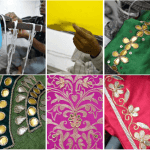
Gota embroidery uses the applique technique, in which, small pieces of zari ribbon are applied onto the fabric with the edges sewn down to create elaborate patterns. The design patterns differ according to the region but the most common patterns are those of leafs, paisley and animal motifs.
If we look back during the older times, real gold and silver metals were used to embroider the patterns. It was the genuine way of making the gota embroidery but was also very expensive. Hence afterwards the gold and silver were replaced by copper coating to make a wee-bit more affordable and further then the copper was replaced by polyester film which is further metalized and coated to suit requirements. This is known as ‘plastic gota’ and is highly durable since it has good resistance to moisture and does not tarnish as opposed to the metal based gota and is massively affordable. If we were to rummage through our great grandmother’s clothes, chances are we would be able to find atleast one precious piece of clothing with gota embroidery (and if lucky with the old-fashioned gold gota work).
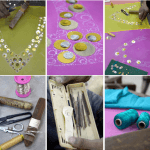
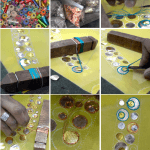
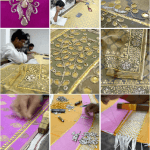
The process of making gota embroidery can be very lengthy and time consuming. The process starts with tying the base fabric to the four thick cords of the wooden frame, known as the Khaat. A craftsman then begins with tracing the pattern design on the gota fabric with the help of tracing paper and chalk powder paste. Based on the required design, the gota fabric is cut and folded into various shapes. It is then back-stitched and hemmed on the base fabric.
Gota work is not only traditional but also very stylish and elegant. Some of the most common fabrics used in sync with gota work are georgette, chiffon, silk, and bandhini. Gota work is extremely textured and gives off a glamorous appeal to the outfit, and of course to the person who wears it.
In Rajasthan, outfits with Gota work are usually worn at auspicious functions. It is generally embroidered on dupattas, turban edges and ghagras, especially on Lehariya print. Be it pastel shades or dark hues like pink, red, black or green, gota work looks amazing with all. Beads and cut stones can also be used in tandem with gota work in order to give it a fine finish. Gota work is also popular in the form of heavy and ornate borders which can then be applied on any form of clothing or decorative accessory. Sarris, salwar-suits, skirts, men clothing (kurta, turban) and other decorative accessory like cushions, bed spreads, clutches, jholas and rugs can allhave gota work on them. Vintage gota work is forever a favorite form of bling for not only the locals but also the tourists.
From common households to Bollywood movies, gota work is popular amongst all. A-list actresses like Aishwariya Rai, Rekha, Rani Mukherji, Priyanka Chopra etc have all donned and worn gota work either on sarees, lehengas or salwar suits. Movies like Umrao Jaan and Bunty aur Bubli had shown us glimpses of this vintage yet most preferred embroidery art.
Due to its applique work, gotta work is not an easy throw and wash. One has to be very careful with the clothing and it has to be hand washed mostly.
Gota work techniques used by embroidery workers and artisans (Source: Photo documentary)