
India has seen a major change in the past few years. Our political leaders want the country to be as advanced and modern as the other flourishing countries, but at the same time encourage the youth to believe in our Indian Ancestry and promote not only our culture but also our age old form of mental and physical fitness called Yoga. Fashion or Fitness, India has a lot to offer to the world.
When we talk about Fashion and Indian Fashion Ancestry, the first name that comes to our mind is that of Gaurang Shah, the Hyderabad based, Textile Revivalist and Fashion Designer. Shah, a self-taught textile designer who calls himself an entrepreneur, is one of the award winning designers of our country who has and is trying to give rebirth to the dying art of weaving and popularizing the dying material of khadi.
The master of the weaves, Gaurang strives to create exquisite handcrafted masterpieces. The sarees are woven in the Jamdani weaving technique which take anywhere upto 2 years to weave depending on the design, thus making his products as exclusive and as valuable as an heirloom piece. It’s not very often that we find the veteran film actress, Sharmila Tagore, complimenting a designer. Tagore, who is widely known for her elegant classic beauty, feels that ‘Gaurang Shah’ is one of the few designers who makes a sari attractive and has asked him to “Teach all the wonderful young girls how to wear saris”.
The flagship store of his ‘Gaurang‘ label in New Delhi is touted as the brand’s very first hand-woven luxury-fashion clothing store. ‘Gaurang‘ already has outlets in Hyderabad, Bangalore, Chennai, Kolkata and Mumbai.
SOUL brings you a detailed conversation with the Designer, who has forever worked towards the revival of textile arts like Kanjeevaram, Khadi, Uppada, Paithani, Patan Patola, Benarasi, Kota, Maheshwari, Bengal weaves, and translates them into niche sarees and outfits.
S: How did you feel when Shri Narendra Modi Ji launched the National Handloom Day in Chennai on August 7th, 2015?
GS: The launch of the handloom day by Modiji, has given a boost to the handloom sector. It just pushes my vision, and gives it a bigger, widened platform to promote revival of Indian Heritage Textiles, the art of our weaves and the richness of our timeless textiles which is very exciting, and overwhelming.
S: What are your thoughts on the ‘Make in India’ campaign? How does it affect the life of the weavers and handloom workers?
GS: The campaign restores belief in the artisans, and gives them the confidence from the government which in turn has increased their enthusiasm, and now the younger generation of weavers wants to carry their ancestral skill and are not diverting into other occupations.
S: When and how did your association with the weavers start?
GS: I first conceptualized my fashion design journey sitting in my father’s small store which sold saris at the age of 8. As I grew up, I felt that woman will be ready to move beyond georgette and chiffons saris if presented with alternative fabric, textures and patterns. My vision was to create saris made in traditional ‘jamdani Weaves’ on handwoven fabrics and implying eco-friendly techniques like use of natural dyes etc. and giving a modern twist to our traditional fabrics.
After my college education, I travelled the length and breadth of the country and convinced jamdani weaver families that potential still exist for their craft if they are willing to change. ‘I gave the confidence that my designs will change the course of their life’. They were ready. Today, after over a decade I have been able to build the finest team that has over 500 weavers.
The label “GAURANG” personifies elegance and captivating beauty of traditional handlooms, weaves, created using Jamdani technique with pure zari on cottons and silks. Traditional motifs, inspired by the sculptures of South Indian temples, floral and geometrics drawn from the nature are the hallmark of the creations. Immense care is taken to preserve and accentuate the aesthetic appeal of its beautiful textures. I believe in offering traditional Indian weaves and hand embroideries like Parsi, Kashmiri, Chikankari, Kutch, Kasauti on handloom sarees with a subtle and sensible contemporary flair.
Way back in 2001,when the traditional Handlooms were fading in to an oblivion, due to declining patronage and an onslaught of growing popularity for embroidered sarees like georgettes and chiffons, weaver communities were mired in debt traps, uncertainty and hunger deaths. I took up the challenge of reviving the traditional handlooms and bringing them back in vogue. It took two painstaking years to regain the popularity for the handlooms.
“GAURANG” label now supports more than 500+handlooms across India in the states of Andhra Pradesh, Maharashtra, Tamil Nadu, Uttar Pradesh etc. specially engaged in a weaving technique called “jamdani”. Jamdani is a brocaded fabric woven with discontinues extra weft yarns. The age old horizontal tapestry technique is imbibed in creating our jamdanis so that like the tapestries we get the exact effect of a drawing on fabric.
S: You are known as the self-taught designer. Can you share some of your early memories of your journey?
GS: I grew up watching my mother wearing hand-woven sarees every day, besides numerous women shopping passionately the woven nine yards at my father’s clothing store ‘Indian emporium’. Over a period of time I realized that women from the new generation were lured to ‘nets and chiffons’ due to lack of modernity in hand-woven sarees, there were also very limited choices earlier times. I found this as a great opportunity to tap.
In 2001, I began my journey with a handful of expert handloom weavers from Andhra Pradesh. The first step was to change the mindset of the handloom weavers, build a pool of master craftsmen and then give them challenging designs that would garner attention from fashion consumers. I was very keen to retain the past yet offer modernity in traditional wear which I knew will list in the bridal and all occasion wear shopping bags of all age groups.
And, label ‘Gaurang’ was born.
It was in my father’s store, I got a chance to interact with clients as well as weavers. I understood that if I could give the clients something new in handloom they would be more than happy to embrace it on a day to day life. I traveled the length and breadth of the country to request weavers to have faith in me and my concepts; it was very difficult as they were not ready to change. I started with a few weavers in Andhra Pradesh and then never looked back.
‘My design challenges the weaver’ it takes a minimum of 5 to 6 months to weave a sari. It’s a very hard task every time, to motivate my weavers. I challenge them with new designs and the economic potential their work has globally, I foresee the art of hand woven fabric fading away, which is very disheartening for a designer like me, as I love Indian weaves and I am confident it has fine potential to become a global trendsetter in the years to come.
S: We all saw the success of ‘Kalpavriksha’, your exhibition-cum-presentation at Lakme Fashion Week Spring/Summer 2015. So what’s in store for 2016?
GS: For 2016, I am working to get my jamdani weaves to an international level and to infuse a sense of global fashion in the traditional weaves.
S: Modi Ji has made Khadi known all across the world with his Modi Jackets. When and how did you first get attracted to Khadi? Has the demand in Khadi clothes increased world-wide?
GS: I first started working with a few khadi weavers in Andhra Pradesh. They had faith in me, and I had the faith in the fabric of freedom. I made a lot of textures in the yarn and fabric; I strived to make it more drape able and fashion forward. After Modiji has popularized his ‘Modi’ jackets in khadi, it has reached the mass people in the country and they are getting more aware of the handloom sector.
S: You work with 100s of weavers all across India. How do you go about it? How do you find the weavers who are the best in their work?
GS: I collaborate with weavers who are enthusiastic, are ready to adapt and are open to experimentation and more over meet my quality standards that I set every time I begin conceiving a collection. I believe the weavers need to be excited to work on these designs as much as I am. They are the real partners of GAURANG creations as they transform my weaving dream into reality. When I strike a relationship with these weavers it is a bond that is sustainable and mutually rewarding.
What is more satisfying is the strong revival of age old craftsmanship which otherwise would have faded away.
S: Last but not the least, various celebrities from Vidya Balan to Sonam Kapoor have been seen in Gaurang Shah Creations. Which one would you call/choose to be your muse?
GS: While it is fantastic and awe-inspiring to say that these fashion icons of our country love our hand woven textiles and has been draping them at many special occasions expanding its charisma, my muse is every ‘Global Indian Woman’ who is epitome and brand ambassadors of our heritage textiles and preserves its grandeur for many centuries then, now and in the future.
S: Any national-international celebrity that you would love to dress?
GS: I would love to dress First Lady Michelle Obama.
S: Your message for the young generation to keep our tradition alive?
GS: For a young weaver my message is to keep the ageless tradition of Jamdani art alive. The art holds great promise in the future with thrust from PM Modi and many young designers who are embracing the handlooms, showcasing them in fashion platforms. Such initiatives will elevate not only their economic position but also encourage them to excel in the art of Jamdani weaving.
My message for young designers is to learn, understand textile before they embark on fashion designing. For the fashion consumers around the world my message is to appreciate the tremendous amount of effort that goes behind in creating the master pieces by the weaver. Share with them the joy of excellence by adding them into their fashion shopping menu and draping them not only in their favorite social occasions but also to office as well as during casual event.

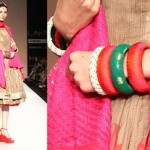




Picture source : Suppied by the Designer